Reading the fine print on a menu has become more challenging, or familiar faces take you an extra second to recognize from a distance. These subtle changes in your central vision could be signs of age-related macular degeneration (AMD). At Foresee Eyecare, our team knows that these changes can come with questions, which is why we’re here to help you understand what could be happening.
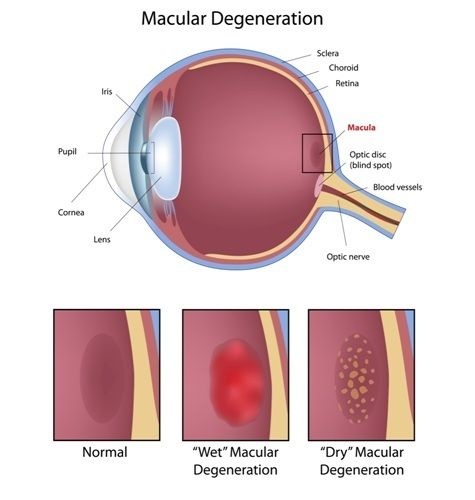
AMD is an eye disease that can affect your central vision, and there are 2 types: dry and wet. The key difference is that dry AMD involves a gradual breakdown of cells in the back of your eye, while wet AMD is caused by abnormal blood vessel growth that can lead to more sudden vision changes.
A Guide to Age-Related Macular Degeneration
How AMD Affects Your Vision
Age-related macular degeneration (AMD) affects the macula, which is the part of your retina (the back of your eye) responsible for clear central vision. This is the vision you use for reading, driving, and seeing fine details clearly. When the macula is affected, your straight-ahead vision may change, while your side vision usually remains unaffected.
Common Risk Factors
Certain factors can influence the likelihood of developing AMD. While age is a primary factor, your family history and lifestyle habits (such as smoking) also play a part. Knowing your individual risk factors can help you have informed conversations with your eye doctor during your regular eye exams.
The 2 Types of AMD: Dry and Wet
Though both types of AMD affect your central vision, they develop differently and therefore have different signs. Dry AMD is far more common and usually progresses slowly over time. Wet AMD is less common but can cause more rapid and noticeable changes to your sight.
Dry AMD
With dry AMD, the light-sensitive cells in the macula slowly break down, and small yellow deposits called drusen can build up under the retina. This process is gradual, and the changes to your vision may happen over several years, often without any noticeable symptoms in its early stages.
Wet AMD
Wet AMD occurs when new, abnormal blood vessels grow underneath the retina. These vessels can leak blood and other fluids, causing damage to the macula, which is why the vision changes associated with wet AMD can appear quite suddenly. Tools like an optical coherence tomography (OCT) scan can help your optometrist see fluid and structural changes associated with this leakage.
Common Symptoms and Vision Changes
The signs of AMD can be easy to miss at first, but they become more apparent as the condition progresses. If you notice any of these symptoms, it’s a good idea to schedule an appointment for an eye disease assessment. Keep an eye out if you notice:
- Straight lines appear wavy
- A dark or blurry area in your central vision
- Consistently needing brighter light when you read
The Role of a Comprehensive Eye Exam
Why You Need Regular Eye Exams
Regular eye exams are a key part of monitoring your eye health, especially as you get older. A comprehensive Vaughan eye exam helps your eye doctor look for early signs of conditions like AMD before (think prevention) you begin to notice symptoms. Early detection can give you more options to manage the condition and support your vision.
What to Expect During Your Appointment
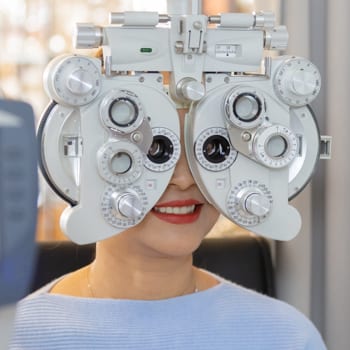
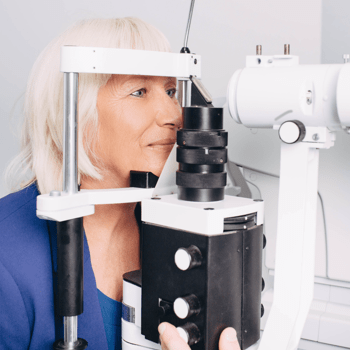
During an eye exam, your eye doctor can perform several tests, which most people find comfortable and straightforward. The eye doctor can check your vision sharpness and may use special drops to get a clear look at your retina at the back of your eye. This detailed view helps them to spot any changes to your macula and assess your overall eye health.
Your Options for AMD Care and Support
If AMD is detected, there are steps you can take to manage its progression and make the most of your vision. The approach depends on whether you have the dry or wet form of the condition.
Support for Dry AMD
For dry AMD, lifestyle changes (Hypertension control/diet/no smoking/wear sunglasses outdoors) and nutritional support can help slow its progression. Your eye care team may recommend the AREDS2 formula—a specific combination of vitamins C and E, zinc, copper, lutein, and zeaxanthin shown in clinical studies to reduce the risk of AMD progression in certain stages.
Other supportive measures include quitting smoking (the most significant modifiable risk factor), eating leafy green vegetables rich in antioxidants, and protecting your eyes from UV exposure with sunglasses. Regular monitoring with OCT scans helps track any changes, and your optometrist may provide an Amsler grid for you to check your vision at home between appointments.
Treatments for Wet AMD
Because wet AMD can progress quickly, treatment focuses on stopping the abnormal blood vessel growth. The most common and effective treatment involves anti-VEGF injections directly into the eye to block the growth factor causing new blood vessels.
These injections are typically given monthly at first, then the frequency may be reduced based on your response. While the idea of an eye injection sounds concerning, the procedure is quick, uses numbing drops, and most patients report only minor discomfort. Many people maintain or even improve their vision with consistent treatment.
Your optometrist can refer you to a retinal specialist who will create a treatment schedule tailored to your specific situation and monitor your progress closely.
Protect Your Central Vision
If you’re over 50 or have a family history of AMD, regular eye exams become increasingly important for early detection. The earlier AMD is caught, the more options you have to preserve your vision.
Foresee Eyecare provides comprehensive eye exams with advanced imaging to detect AMD in its earliest stages. Book your appointment at our Vaughan, Thornhill, or Maple location today. Book your eye exam today.