Myopia can affect your child’s vision and worsen with time, placing their eye health at risk. However, your eye doctor can help correct your child’s vision and slow myopia progression with specialized treatments. If your child has myopia, what lenses can help control this condition?
Continue reading to learn about myopia, including what treatments are available and what lenses can help slow myopic progression.
What Is Myopia?
Approximately 30% of Canadians have myopia, a common refractive error. If you have myopia, nearby objects appear clearly while faraway images look blurry. Many people develop this condition when they’re children. It has been projected that by the year 2050, approximately 50% of the world’s population will suffer from myopia.
While myopia can develop early in childhood, your child may not know they have a vision problem. They may assume everyone sees as they do, making it important to watch for signs of an eye problem in your child.
Your child may have myopia if they experience any of the following symptoms:
- Trouble seeing the front of the classroom clearly
- Partially closing their eyelids or squinting to see clearly
- Headaches caused by eyestrain
- Frequent eye rubbing & excessive blinking
- A desire to sit close to the television or at the front of the classroom to see
What Causes Myopia?
Someone with myopia has unique eyes where their cornea is too steep or their eyes are too long. Their eye shape causes light to focus in front of the retina instead of on the retina as it should, leading to blurry vision.
Besides eye shape, other factors can affect myopia development, including:
What Is Myopia Progression?
Your child’s eyes continue to grow as they do, meaning that myopia can progress as they age. When myopia is left untreated, it can gradually worsen until it becomes a more severe form, known as high myopia.
Someone has high myopia when they need -5.00 dioptres or more of vision correction. For most people, myopia tends to stabilize in early adulthood. There’s a chance that myopia progresses for years if left untreated, causing your child to need heavy prescriptions to see clearly later in life.
Besides blurry vision, high myopia increases the risk of developing several serious and potentially blinding eye conditions especially later in life, including:
How Do Optometrists Treat Myopia?
Your eye doctor can address myopia progression with specialized treatments. Depending on your child’s unique vision situation, these treatments can include contact lenses, glasses, eye drops, or vision therapy. Glasses and contacts can be a good treatment option because they help slow myopia progression while helping your child see more clearly.
Myopia Control Lenses at a Glance
If your child has myopia, several lens options can help slow its progression while keeping their vision clear. Here’s a quick comparison of the main treatments, each covered in more detail below:
| Lens Option | Type | How It Works | Reported Effect on Progression | Notable Fit |
| Orthokeratology (Ortho-K) | Overnight rigid contact lens | Gently reshapes the cornea while sleeping; worn at night, removed by day | Slows progression by roughly 36–56% | Kids who prefer no daytime lenses or glasses |
| MiSight / Abiliti | Daily disposable soft contact lens | Creates myopic defocus to redirect how light focuses | Slows progression by up to 59% | Younger children; easy daily use |
| SightGlass | Eyeglass lens (D.O.T. technology) | Thousands of micro-dots reduce retinal contrast | Slowed progression in about 85% of children in study | Younger age groups, especially under 8; Foresee is an authorized prescriber |
| MiyoSmart | Eyeglass lens (D.I.M.S. technology) | Ring-shaped zones create myopic defocus | Slows progression by up to 60% over 2 years | Kids who do better with glasses than contacts |
| Stellest | Eyeglass lens (H.A.L.T. technology) | Tiny lenslets slow axial growth | Slows progression by up to 67% when worn 12 hrs/day | Glasses wearers seeking high efficacy with consistent wear |
What Lenses Are Available to Control Myopia Progression?
Controlling myopia with lenses can help slow myopia progression in your child’s eyes while providing them with clearer vision at the same time. Your optometrist can recommend the treatment option they think best suits your child’s needs during an eye exam. Whether with contact lenses or glasses, your eye doctor can help slow myopia progression in your child.
Some myopia control lenses include Orthokeratology, MiSight and Abiliti contact lenses, SightGlass, MiyoSmart, and Stellest lenses in glasses.
Orthokeratology (Ortho-K)
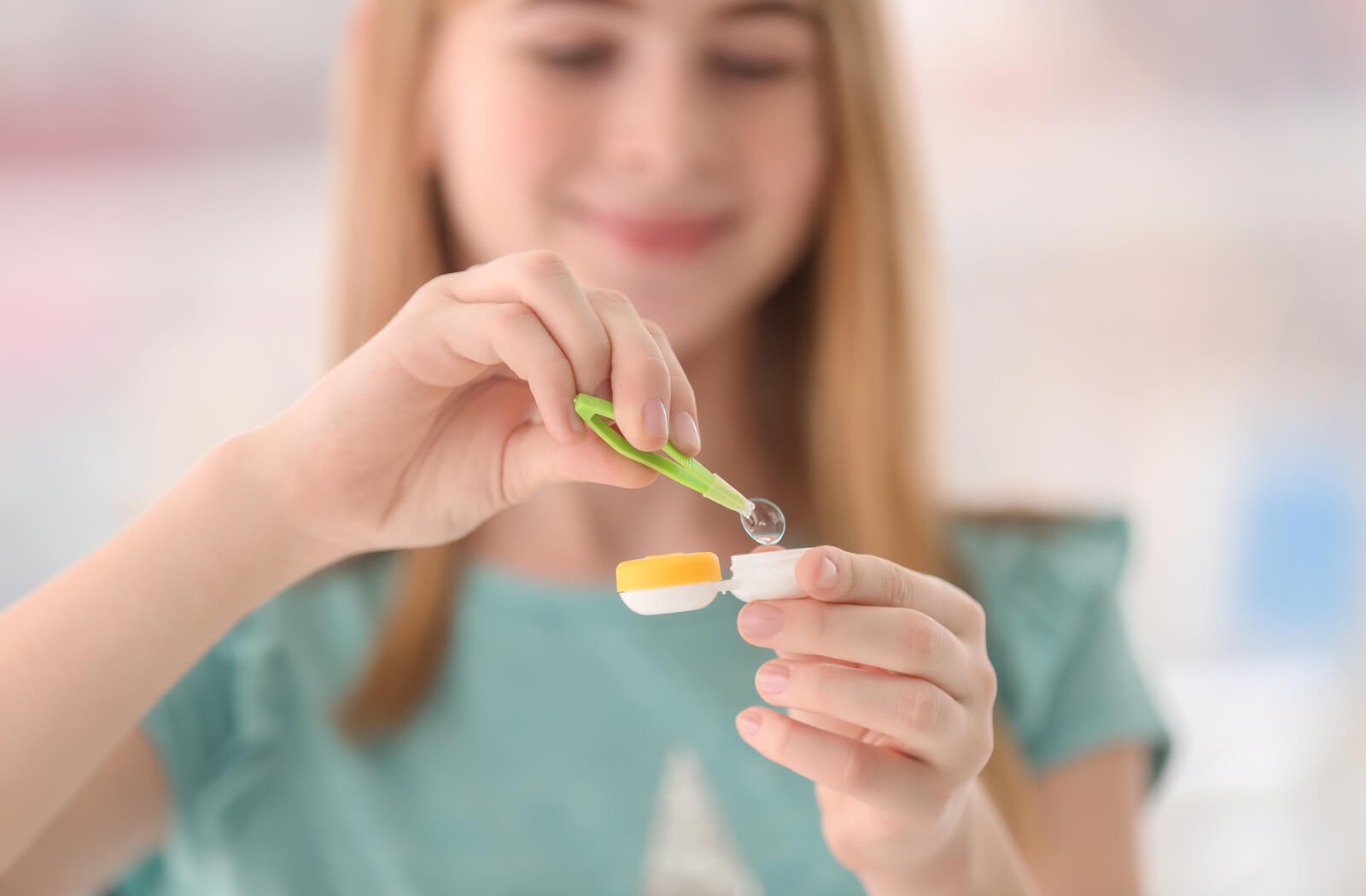
Orthokeratology, also known as ortho-k, is a corneal reshaping lens. These durable and rigid contact lenses help control and correct myopia. They gently reshape the cornea overnight, allowing your child to see clearly throughout the day without needing corrective eyewear.
Ortho-k contact lenses flatten the centre of the cornea to change how light bends as it enters the eye, correcting your child’s vision. These lenses are safe and effective—2018 research discovered these contacts can slow myopia progression by 36–56% in children.
MiSight and Abiliti Contact Lenses
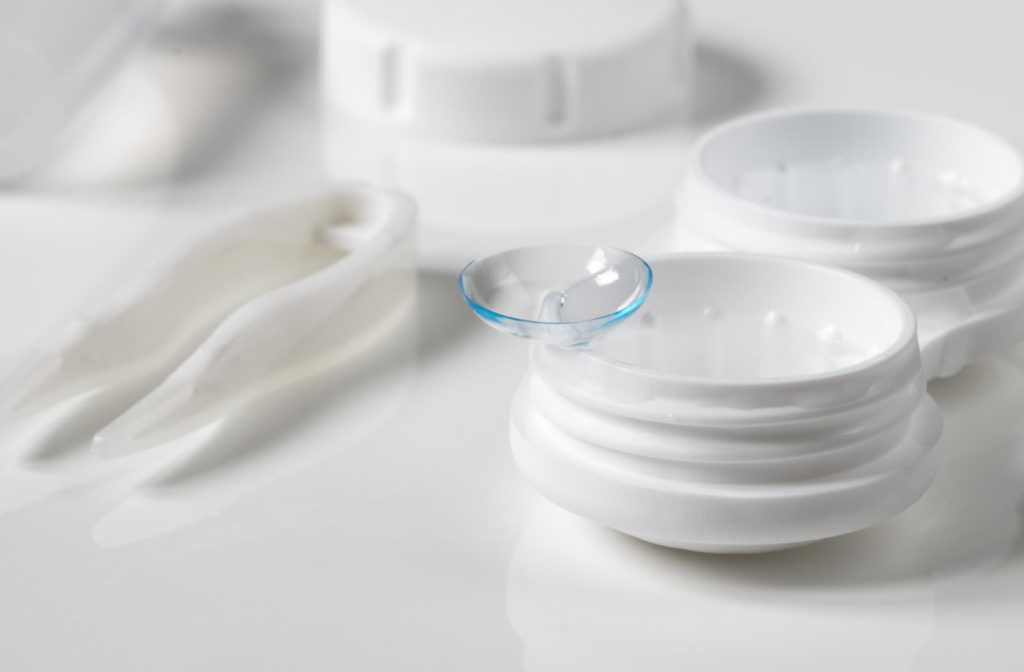
MiSight contact lenses and more recently Abiliti contact lenses have a unique design specialized for children with myopia. They’re disposable lenses your child replaces daily, making them easy and safe to use for even younger children. These lenses can help correct and control myopia by creating myopic defocus, a technique to change how the eye focuses light.
The lens centre helps correct your child’s vision, and contains different types of myopia treatment zones to help focus light in front of the retina instead of behind the retina, shifting your child’s focal point of vision and tricking the eye into not growing.
Soft daily myopia control contact lenses can help slow myopia progression by up to 59% in children.
SightGlass
SightGlass is a new way to help control and correct myopia in children. These eyeglasses feature thousands of micro-dots in the lens, helping scatter light and reduce contrast on the retina (D.O.T. technology). 2020 research found these glasses slowed myopia progression in 85% of the children in the study, with myopia progressing less than a dioptre. This may be the best available lens option for younger age groups (especially <8 years old) and Foresee Eyecare is recognized as an authorized site that specializes in prescribing this lens.
MiyoSmart Glasses
MiyoSmart glasses can help your child see better while slowing myopic progression. These glasses utilize defocus incorporated multiple segments (D.I.M.S.) technology to help images focus in front of the retina instead of behind the retina, known as myopic defocus.
A MiyoSmart lens features a central zone for correcting myopia. Additionally, it has several ring-shaped zones surrounding the lens to slow myopia progression. 2019 research found that the DIMS technology used in MiyoSmart lenses can help slow myopia progression by up to 60% in children over 2 years.
Stellest Lenses
Stellest lenses feature H.A.L.T. technology to help correct and control your child’s myopia. These lenses have tons of tiny lenses (known as lenslets), which help slow down myopia progression. When worn 12 hours a day, Stellest lenses can slow myopia by up to 67%.
You Can Help Protect & Preserve Your Child’s Vision
Myopia can affect your child’s vision and eye health more than you think. Besides needing heavier prescriptions in adulthood, myopia can increase your child’s risk of eye disease if it worsens. However, early action can help slow myopia progression and protect your child’s vision. Contact your eye doctor if your child has myopia symptoms.
Frequently Asked Questions About Myopia Control Lenses
Which myopia control lens is most effective?
Effectiveness varies by child, but in published studies the reported results range from about 36% up to 67% slowing of myopia progression depending on the option. Stellest lenses have reported up to 67% when worn 12 hours a day, MiyoSmart up to 60% over two years, and soft daily contact lenses like MiSight up to 59%. The best choice depends on your child’s age, prescription, and lifestyle, which an optometrist can assess during a children’s eye exam.
At what age should myopia control start?
Myopia control is most beneficial when started early, while a child’s eyes are still growing and myopia is more likely to progress. Because children often don’t realize their vision has changed, regular eye exams help catch myopia early so treatment can begin before it advances. Some lens options, such as SightGlass, are particularly suited to younger children.
Are myopia control glasses or contact lenses better?
Both can effectively slow myopia progression, so the better option depends on the child. Contact lenses like MiSight or overnight Ortho-K suit kids who prefer not to wear glasses during the day, while glasses lenses like MiyoSmart, Stellest, and SightGlass are a good fit for children who aren’t ready for contacts. An optometrist can help match the option to your child’s needs through myopia control.
Can myopia control lenses stop myopia completely?
No. Myopia control lenses are designed to slow progression, not stop or reverse it. Slowing progression matters because higher levels of myopia increase the long-term risk of serious eye conditions like retinal detachment and glaucoma. The goal is to limit how far a child’s myopia advances over time.
How does Ortho-K work for myopia control?
Orthokeratology (Ortho-K) uses rigid contact lenses worn overnight that gently reshape the cornea while your child sleeps. In the morning the lenses are removed, allowing clear vision during the day without glasses or contacts. Research has reported Ortho-K can slow myopia progression by roughly 36% to 56% in children.
Why is it important to treat childhood myopia?
Beyond needing stronger prescriptions over time, untreated myopia that progresses to high myopia raises the lifelong risk of conditions like retinal tears, retinal detachment, glaucoma, cataracts, and myopic macular degeneration. Early treatment helps protect both your child’s vision and their long-term eye health.