Key Takeaways
- Myopia makes distant objects blurry and tends to get worse as kids grow.
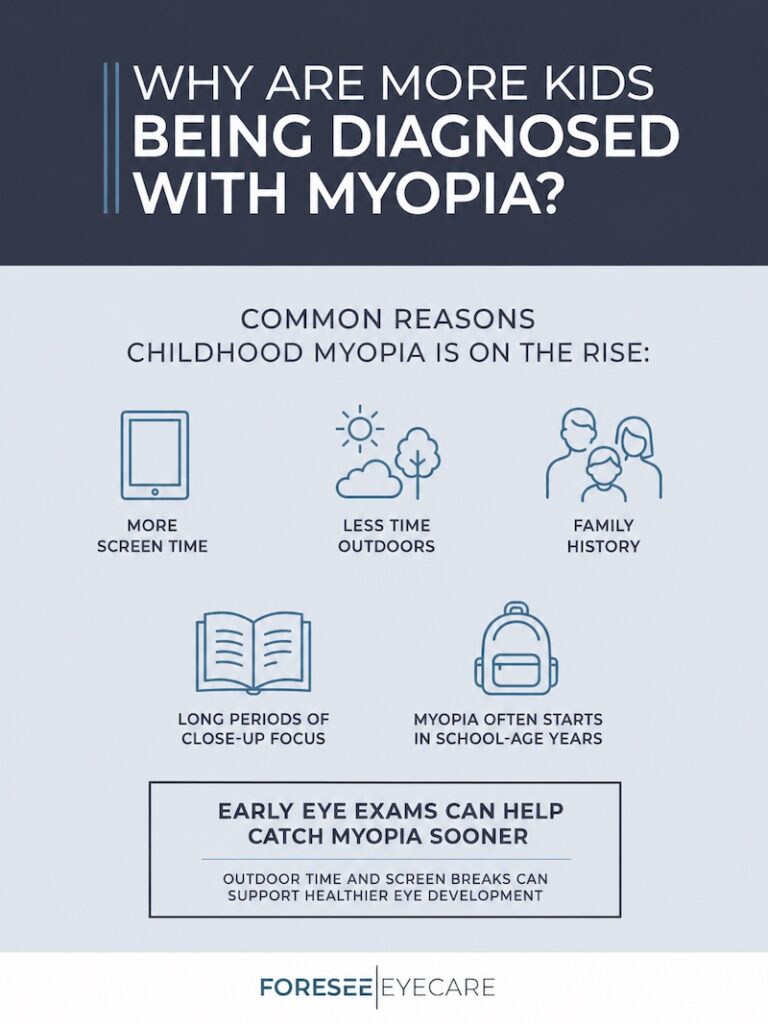
- More screen time and less time outdoors are linked to rising myopia rates in children.
- Family history raises a child’s risk, but lifestyle plays a role too.
- Early eye exams give your eye doctor a chance to track changes and act sooner.
- Simple daily habits, like outdoor time and screen breaks, can support healthier eye development.
What Parents Are Noticing More Often
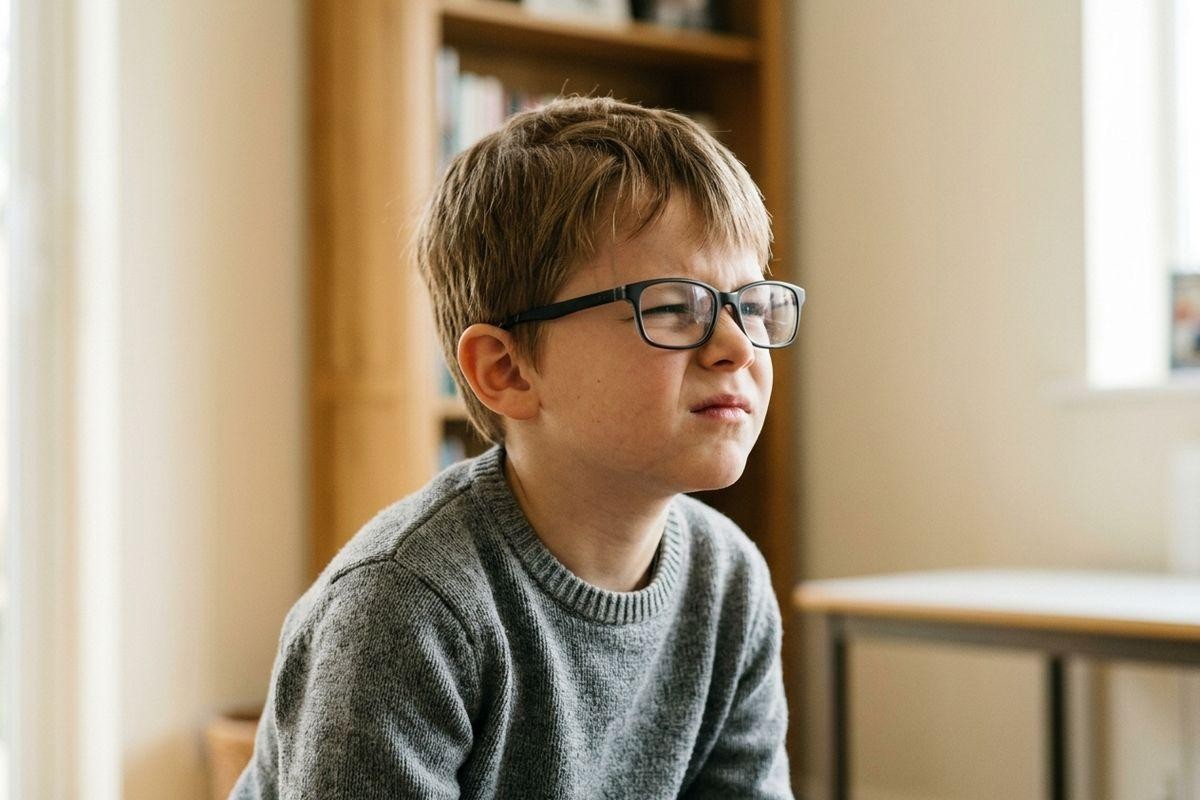
Your child squints at the TV from across the room. They inch closer to the screen without realizing it. Maybe they’re rubbing their eyes after school or falling behind in class for no clear reason. These small moments are easy to overlook, but they can be early signs that your child’s vision is changing.
Myopia rates in children have been climbing steadily, and the way kids spend their time today is a big part of why. Knowing what’s happening, and what you can do about it, can make a real difference for your child’s eye health down the road.
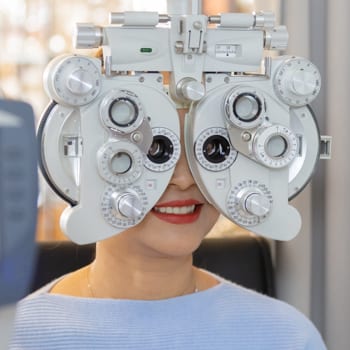
If you’re wondering what a children’s eye exam involves, our team at Foresee Eyecare can walk you through every step.
What Myopia Does to Your Child’s Vision
Myopia, or nearsightedness, means your child can see things up close clearly but struggles with objects far away. It happens when the eye grows slightly too long, causing light to focus in front of the retina instead of directly on it. This small change has a big impact on how your child experiences the world.
Myopia often starts in the school-age years and tends to get worse as a child grows, which is why early detection matters so much. The earlier myopia control starts, the more you can protect your child’s future vision.
Signs Your Child Might Be Struggling to See
What to Watch For at Home
Kids don’t always say “I can’t see clearly.” More often, you’ll notice behaviours before you hear complaints. Watch for these signs around the house:
- Squinting at the TV or sitting unusually close to the screen
- Rubbing their eyes often or mentioning that their eyes feel tired or uncomfortable
What to Watch For at School
School is often where myopia becomes hard to ignore. A child who can’t see the front of the classroom clearly may start falling behind without anyone connecting the two. Potential signs of myopia at school include:
- Trouble copying notes from the board at the front of the class
- A drop in schoolwork or focus that doesn’t have an obvious explanation
- Avoidance from prolonged reading and near tasks and/or tired eyes.
Why Myopia Rates Are Rising in Kids
Too Much Time Indoors and on Screens
Kids today spend a lot of time looking at things that are very close to them, whether that’s a tablet, a phone, or a book. Hours of sustained close-up focus puts strain on developing eyes and may contribute to the progression of myopia. For practical guidance on managing daily screen habits, our screen time recommendations for children page is a helpful place to start.
Not Enough Time Outside
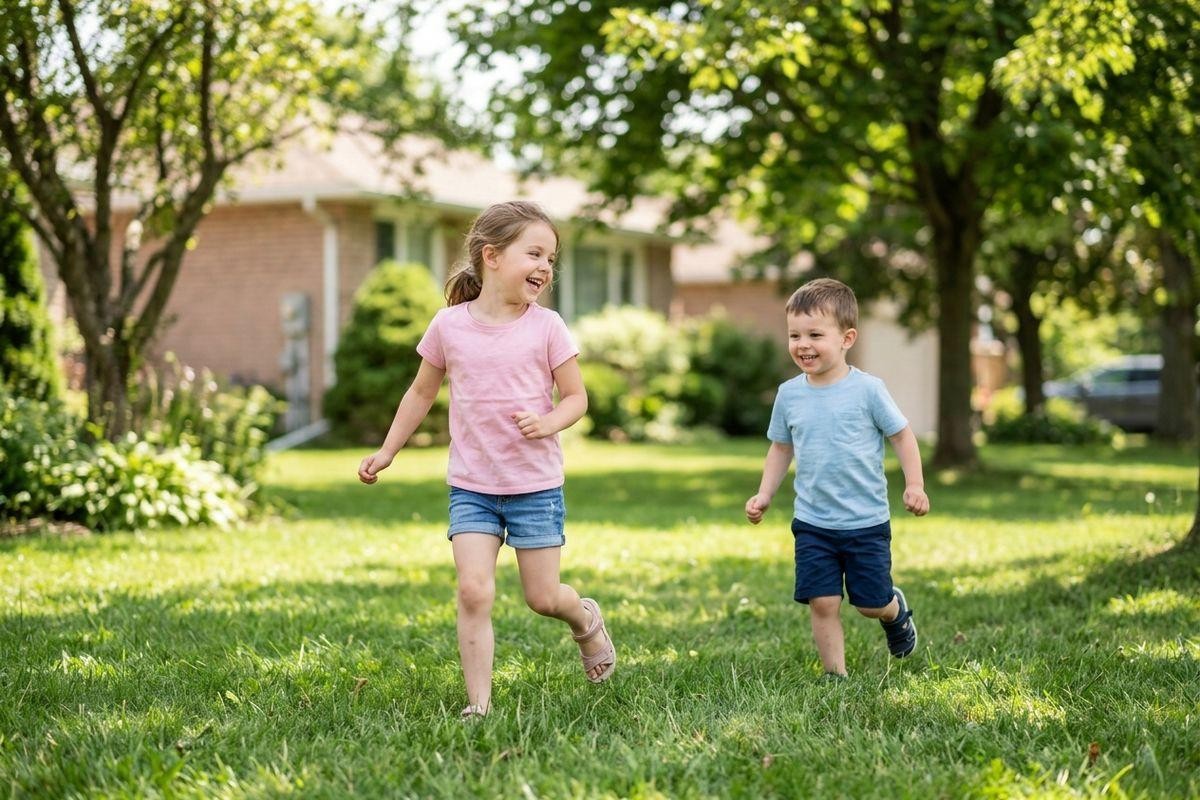
This one surprises many parents. Natural light actually plays a role in healthy eye development. Research points to at least two hours of outdoor time per day as a meaningful factor in slowing how quickly myopia progresses in children.
Family History Plays a Role Too
If both parents have myopia, a child’s risk goes up noticeably. But genetics alone can’t explain why so many more kids are being diagnosed today than a generation ago, so lifestyle and environment are clearly contributing factors.
Why Catching Myopia Early Matters
Myopia that starts at a young age tends to progress further than myopia that develops later. Higher levels of myopia over a lifetime are linked to a greater risk of certain eye conditions, including retinal issues and glaucoma, later in life.
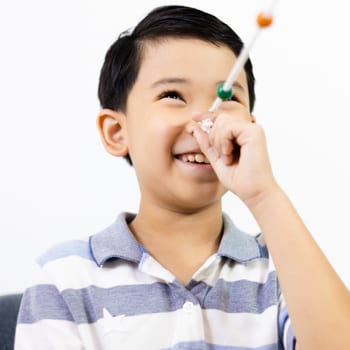
Regular eye exams give your eye doctor a chance to spot changes early, track how your child’s eyes are growing, and recommend options that may help slow progression. Our myopia control page explains the different approaches available for children at various stages, including specially designed contact lenses like MiSight and ortho-k lenses that gently reshape the cornea overnight.
Waiting until your child complains about their vision means missing the window when early action can help the most.
Simple Habits That Support Your Child’s Eye Health
Screen Time Tips
You don’t have to eliminate screens. Small adjustments can take some of the strain off your child’s eyes during everyday use.
- Have them follow the 20-20-20 rule: every 20 minutes of screen time, look at something 20 feet away for 20 seconds
- Keep screens at a comfortable distance from the face and use them in a well-lit room
Make Time for the Outdoors
Time outside is one of the simplest and most effective ways to support healthy eye development. Aim for at least a couple of hours of outdoor time each day when possible, whether that’s a sport, a walk, or unstructured play. Natural light gives developing eyes something screens can’t.
When to Book Your Eye Exam in Vaughan
Don’t wait for your child to complain before booking an appointment. Many kids don’t know what clear vision is supposed to be like, as they’ve never experienced it themselves. An eye doctor can track how your child’s eyes are developing over time and walk you through the next steps if they find that your child has myopia.
At Foresee Eyecare, families across Vaughan, Thornhill, Maple, and Richmond Hill trust our doctors to look after their children’s vision. Our team includes a Fellow of the American Academy of Optometry and optometrists with advanced training in pediatric eye care and myopia management, supported by modern diagnostic technology (biometry/axial length measurements) that helps us track even subtle changes in how your child’s eyes are developing.
Catching myopia early gives your child the best chance at protecting their long-term vision. Book an eye exam today and let our team create a plan built around your child’s needs.