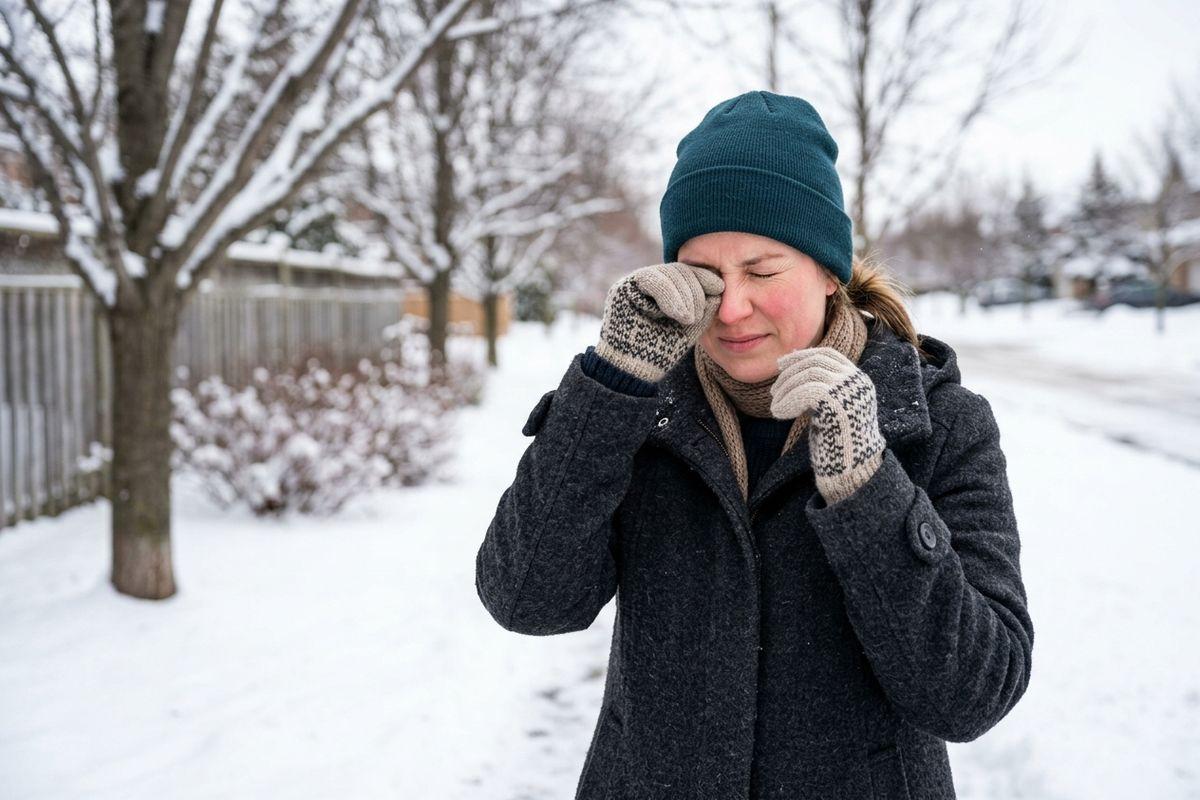
Many people notice their eyes get more uncomfortable as the temperature drops. Your eyes need a steady supply of moisture to feel good, and winter pulls that moisture away, indoors and out.
Your eyes often feel worse in winter because cold wind and dry, heated air thin out the tear film that protects them, which can make existing issues like dry eye more noticeable. For some people, that dryness can even change how clearly they see from one hour to the next.
What Winter Does to Your Eyes
A thin layer of tears coats the front of your eyes and keeps them clear. When your eyes don’t make enough tears, or the tears they make don’t work the way they should, you can develop dry eye.
Outside, wind and cold air pull moisture off the surface of your eyes faster than your body can replace it. Then you head indoors, where the furnace lowers the humidity in your home and keeps drying them out. So you’re moving between 2 dry environments all day.
Constant watering in the cold can point to dryness too. When your tear film breaks down too quickly, your eyes may try to make up for it by producing extra watery tears, which is why watery eyes and dry eyes so often show up together.
Common Winter Eye Symptoms to Watch For
Winter eye discomfort is easy to brush off as part of the season. Pay attention if you notice any of these common signs:
- Burning or stinging
- A gritty feeling, like something’s stuck in your eye
- Redness
- Sensitivity to light
- Blurry vision that comes and goes during the day
Some people also find their eyes feel heavy and tired by the afternoon, even on days they’ve spent very little time on a screen.
Why Winter Driving Can Feel Harder on Your Eyes
Shorter days mean more of your commute happens in the dark. Your pupils open wider in low light to let more in, and that can make driving at night feel a little less sharp.
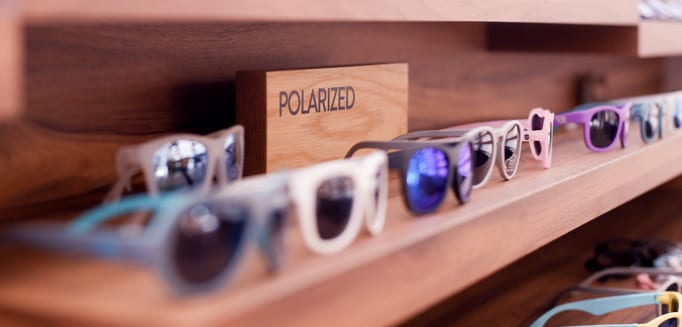
The low winter sun brings its own problem. It can sit right at eye level on your drive home, and sunlight that bounces off wet roads and snowbanks adds glare. Polarized lenses can help reduce glare from reflective surfaces, which can make driving more comfortable.
If your vision feels less clear at night than it used to, have your prescription checked. Your optometrist can see whether your glasses still suit the conditions you drive in.

Do You Need Sunglasses in the Winter?
Lots of us put our sunglasses away once summer’s over. Hold onto them. Snow reflects sunlight back up toward your face, so on a bright day after a fresh snowfall, your eyes get hit with UV light from above and below.
Too much UV exposure can raise your risk of eye diseases like cataracts over time. Strong reflection off the snow can also cause a painful injury called snow blindness.
Look for sunglasses labelled 100% UV or UV400 protection. A wraparound pair can reduce UV coming in from the sides while keeping cold wind off your eyes.
Simple Ways to Protect Your Eyes in the Winter
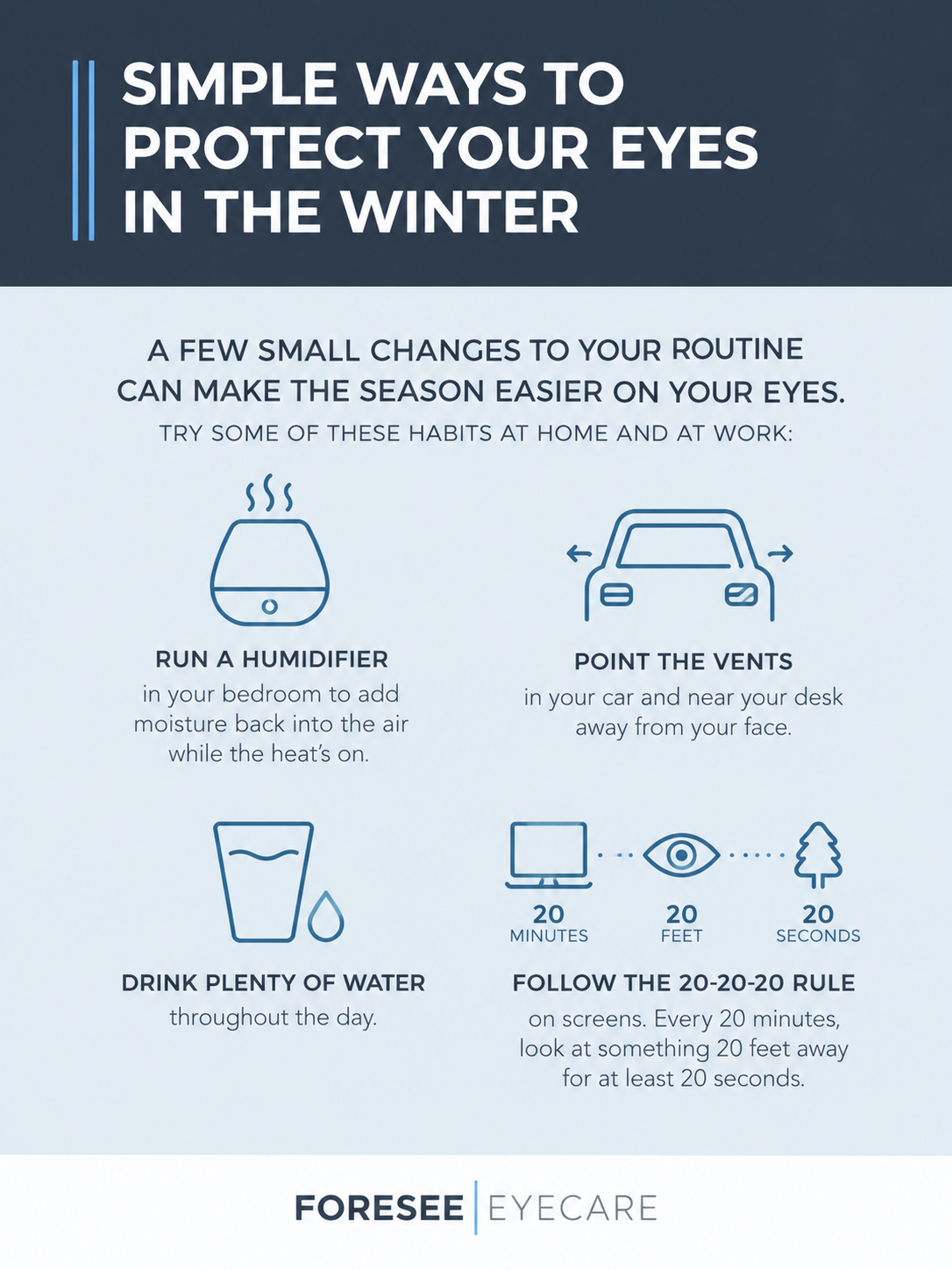
A few small changes to your routine can make the season easier on your eyes. Try some of these habits at home and at work:
- Run a humidifier in your bedroom to add moisture back into the air while the heat’s on.
- Point the vents in your car and near your desk away from your face.
- Drink plenty of water throughout the day.
- Follow the 20-20-20 rule on screens. Every 20 minutes, look at something 20 feet away for at least 20 seconds.
Remind yourself to blink during long stretches of reading or screen time, too. We normally blink about 15 times a minute, and that number can drop by half when we’re staring at a screen.
When to See an Optometrist About Winter Dry Eye
A few days of dry, uncomfortable eyes during a cold snap is common. If your symptoms keep coming back or don’t settle down after a few days, book an appointment with your optometrist. At Foresee Eyecare, we have specialized dry eye examinations and management/treatment options that specifically target dry eye disease.
Several eye conditions share the same symptoms as seasonal dryness, so your optometrist will want to rule those out first. Evaluation may involve examination of your eyes and specialized diagnostic testing, such as tear film break-up time, Meibography, and tear film production testing.
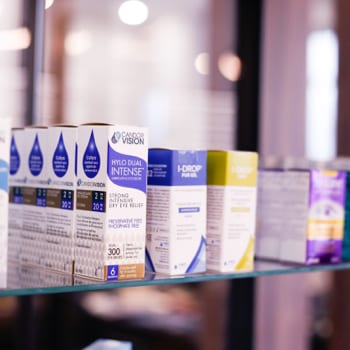
From there, we’ll discuss dry eye treatment that fits your needs. Foundational therapy may involve lubricating eye drops, warm compresses, and omega-3 supplementation. In-office treatments such as IPL/RF/red light therapy may also be recommended if your eyes need more support.
Keep Your Eyes Comfortable Until Spring
Winter dryness is common, and you can manage a lot of it with small changes at home. If the discomfort sticks around, your optometrist can identify the cause and guide your next steps.
At Foresee Eyecare, we’ll take the time to understand what’s bothering your eyes and suggest practical options that fit your daily routine. If winter has been rough on your eyes, book your dry eye examination and let’s find you some relief.