
Key Takeaways
- Eye twitching is usually harmless and tied to lifestyle factors like stress, caffeine, or poor sleep.
- Dry eyes and screen strain are common contributors that often go unnoticed.
- Most twitches resolve on their own with small habit changes.
- Twitching that lasts more than a week, affects your vision, or comes with other symptoms is worth getting checked.
- A Vaughan eye exam can help identify what’s driving persistent twitching.
That Annoying Flutter in Your Eyelid
You’re sitting at your desk, scrolling through your inbox, and suddenly your eyelid starts doing its own thing. It flutters, pulses, and refuses to stop. Nobody else can see it, but you feel every twitch. It’s distracting, a little unsettling, and often happens at the worst possible moments.
Eye twitching is almost always harmless, and in most cases, it traces back to everyday lifestyle factors rather than a serious condition. That said, it helps to understand what’s actually happening and when eye twitching is worth paying closer attention to. Our team at Foresee Eyecare sees this come up often, and a comprehensive eye exam can go a long way toward answering your questions.
What Eye Twitching Actually Is
Eye twitching is an involuntary spasm of the eyelid muscle. The upper lid is the most common location, though twitching can happen in either eye or both at the same time. The spasms are usually brief, lasting a few seconds or coming and going over the course of a day.
The medical term for this is myokymia. It sounds complicated, but it simply refers to the small, repetitive muscle contractions that cause twitching. In most cases, myokymia settles down on its own without any treatment.
Common Factors Behind Eye Twitching
Lifestyle Factors That Play a Role
Your daily habits are often the first place to look when your eyelid starts twitching. A few of the most frequent contributors include:
- Too much caffeine, whether from coffee, tea, or energy drinks
- Poor sleep or ongoing stress
- Long hours on screens without breaks (due to digital eye strain)
When It Could Signal Something More
In rarer situations, twitching can point to something beyond a lifestyle issue. This might be the case if twitching occurs alongside visible facial spasms, if it’s connected to a change in medication, or, in uncommon cases, if you’ve developed a neurological condition. These cases are genuinely rare, but they’re worth knowing about so you can recognize when something feels different from a typical flutter.
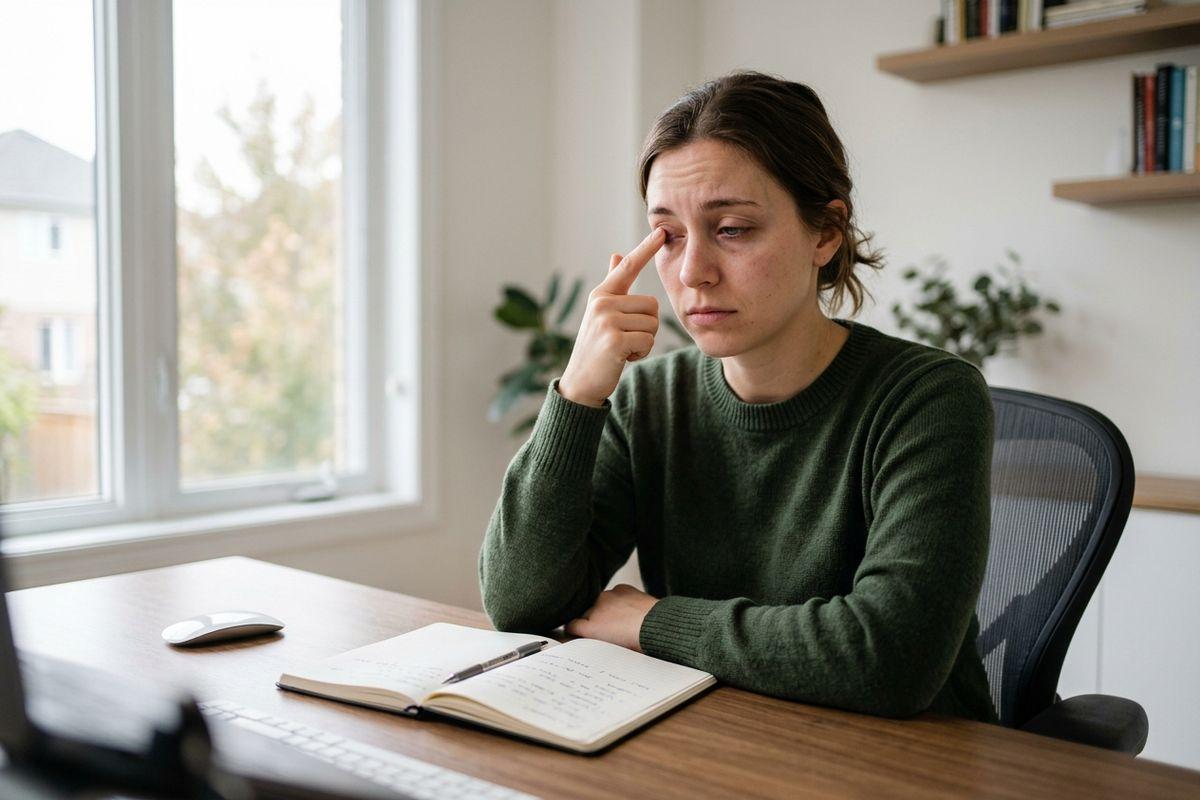
Should You Worry About Eye Twitching?
Probably not. Most twitching fades within a few days once you get more sleep, cut back on coffee, or step away from your screen for a bit. It’s one of those things that feels more alarming than it usually is.
That said, there are a few signs worth watching for:
- Twitching that continues for more than a week
- Twitching that spreads to other parts of your face
- Drooping in the eyelid or around the eye
- Unusual discharge or redness alongside the twitching
- Twitching that starts affecting your ability to see clearly
If any of these symptoms show up, that’s a good reason to get your eyes looked at. Our eye disease diagnosis and management page covers some of the major conditions that a thorough eye exam can help detect early.
Simple Ways to Help Reduce Eye Twitching
Habits Worth Trying at Home
Before booking an appointment, a few small changes can make a noticeable difference. Try scaling back on caffeine for a few days and prioritizing a full night of sleep. If you’re spending several hours on screens every day, try following the 20-20-20 rule. Every 20 minutes, look at something 20 feet away for 20 seconds. This gives your eye muscles a chance to relax.
If your eyes feel dry or irritated, lubricating drops from the pharmacy can help soothe your discomfort. Look for preservative-free options if you’re using them more than a few times a day.
When a Vaughan Eye Doctor Can Help
Sometimes eye twitching sticks around no matter what you try at home. A Vaughan optometrist can also rule out any underlying concerns that a lifestyle adjustment won’t address. Our team at Foresee Eyecare can take a closer look, help figure out what’s driving the twitching, and point you toward the right next steps. You can book an exam online or give our clinic a call to get started.