
Key Takeaways
- Glaucoma damages your optic nerve slowly and without obvious warning signs
- Most people over 40 with no diagnosis should get screened yearly
- Known risk factors call for more frequent monitoring
- If you’ve been diagnosed, your recommended schedule depends on how stable your condition is
- A Vaughan optometrist can build a monitoring plan tailored to your eyes
Glaucoma Is a “Silent Thief of Sight”
Glaucoma often doesn’t announce itself. Instead, it quietly chips away at your peripheral vision over months and even years. Many people don’t notice symptoms until they already have permanent vision loss.
How often you should be screened for glaucoma depends on your age, risk factors, and whether you’ve already received a diagnosis. However, for most people over 40, once a year is a reasonable starting point. From there, your eye doctor can adjust the schedule based on what your results show.
At Foresee Eyecare, we offer comprehensive glaucoma screening as part of routine eye exams. The public should be aware that glaucoma is oftentimes an asymptomatic and silent eye disease causing vision loss gradually. Modern knowledge and technology allows most cases to be diagnosed by professionally trained eye doctors during routine eye examinations. Staying current with your eye disease monitoring is one of the most practical things you can do for your long-term vision.
What Glaucoma Does to Your Vision
Your optic nerve carries visual information from your eye to your brain. Glaucoma causes damage to that nerve, usually due to increased eye pressure and usually very slowly over time.
In most cases, glaucoma has no obvious symptoms. Vision loss caused by glaucoma starts at the edges/periphery of your vision, and your brain naturally fills in the gaps. By the time central vision is affected, a significant amount of nerve damage has already occurred. Unfortunately, this damage is permanent. Think of it as tunnel vision over time until central vision is even lost.
Signs That Glaucoma May Be Developing
Early Warning Signs to Watch For
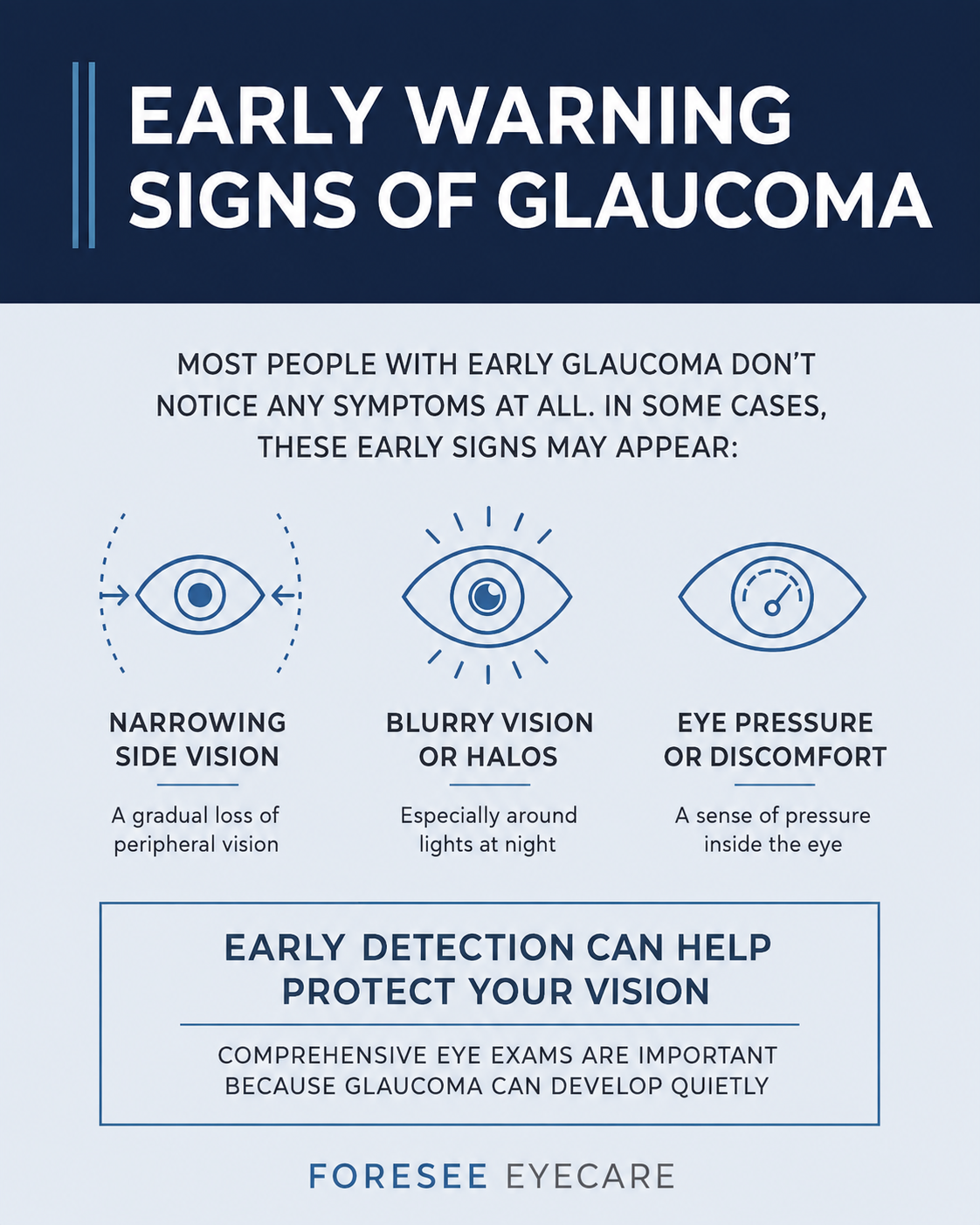
Most people with early glaucoma don’t notice any symptoms at all. However, in some cases, a few early symptoms may appear. It’s worth paying attention if you notice any of the following:
- A gradual narrowing of your side (peripheral) vision
- Blurred vision or halos around lights, especially at night
- A sense of pressure or discomfort inside the eye
Risk Factors of Glaucoma
Some people are more likely to develop glaucoma than others. If any of the following apply to you, it’s worth talking to your eye doctor about how often you should be checked:
- A parent or sibling has been diagnosed with glaucoma
- Being over 40 with elevated eye pressure
- Nearsightedness, also called myopia
How Often You Should Get Screened
If You Have No Diagnosis Yet
For most adults over 40, a yearly eye exam that includes glaucoma screening is a solid routine. You don’t need a separate appointment just for glaucoma.
If you have one or more risk factors, your eye doctor may recommend that you come in more often, perhaps every 6 months. The goal is to catch any changes early, when there are more options to slow progression.
If You’ve Already Been Diagnosed
Your visit frequency depends on where things stand with your condition.
- Stable or mild glaucoma: yearly visits are common for most people in this category
- Worsening or more advanced glaucoma: visits every 3 to 6 months are typical
- Ongoing monitoring continues for life, even when things seem stable
Eye pressure can shift over time, even with treatment, so staying consistent with your follow-up appointments is how you stay ahead of changes.
What a Glaucoma Screening Actually Involves
Tests for Glaucoma
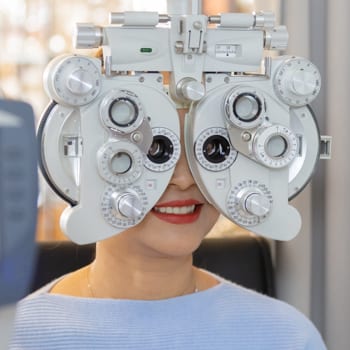
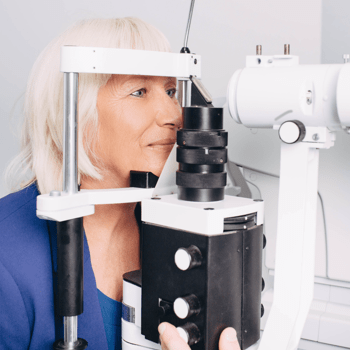
A glaucoma screening isn’t complicated or uncomfortable. Here’s what the process involves:
- Eye pressure measurement to check for elevated intraocular pressure
- Measurement of the thickness of the cornea that affects eye pressure
- Assessment of the anterior chamber angle (gonioscopy) of the eye
- An optic nerve scan (OCT) that measures the thickness of nerve tissue
- A visual field test that maps out how well you can see to the sides
- Thorough case history and assessment of genetic/hereditary risk factors
If you’re curious about how the optic nerve scan works, OCT eye scans create detailed images of your retina and nerve tissue, which helps your eye doctor spot early changes.
How Results Guide Your Follow-Up Plan
If your results are stable and consistent, your eye doctor may space out your visits. If they spot any concerns, more frequent testing can help confirm whether a change is real or just a one-time fluctuation. Your follow-up schedule gets built around your test results, not a one-size-fits-all approach.
Why Staying on Top of Screenings Protects Your Vision
Glaucoma isn’t something you manage once and move on from. Eye pressure shifts, nerve health changes, and treatment may need to be adjusted over time. Regular screenings give you and your eye doctor the information you need to stay ahead of those changes.
Catching glaucoma early also means that you have more options. A Vaughan eye doctor can build a long-term plan that tracks your eye health consistently, so nothing gets missed between visits.
If it’s been more than a year since your last Vaughan eye exam, or if glaucoma runs in your family, it’s a good time to book a visit. Our team at Foresee Eyecare can review your eye health, assess your personal risk, and help you figure out the right screening schedule for where you’re at right now. Request an appointment online to get started.