
Key Takeaways
- Dry eye happens when your eyes make too few tears, poor-quality tears, or both.
- You may feel stinging, burning, grittiness, or even watery eyes.
- Age, health conditions, medications, screens, and dry air can all play a role.
- Simple habits at home can help ease mild symptoms.
- Your optometrist can assess your eyes and build a treatment plan around your needs.
You blink, and it feels like a grain of sand is stuck under your eyelid. By mid-afternoon, your eyes sting, your screen looks a little fuzzy, and you catch yourself rubbing them again. Our team at Foresee Eyecare often hears about moments like these from families and professionals, and they frequently point to dry eye.
Dry eye can feel like stinging, burning, or a gritty, sandy feeling, and it can also bring redness, light sensitivity, blurry vision that comes and goes, and even watery eyes. Knowing these signs can help you decide when it’s time to look into dry eye treatment.
What Is Dry Eye?
Dry eye happens when your eyes make too few tears, poor-quality tears, or both. Your symptoms might show up only in certain places, like on a long flight or after hours at your computer.
For some people, it stays mild.
For others, it can affect comfort, vision, and daily routines, making it harder to read a bedtime story or finish a workday without squinting.
Common Dry Eye Symptoms and Sensations
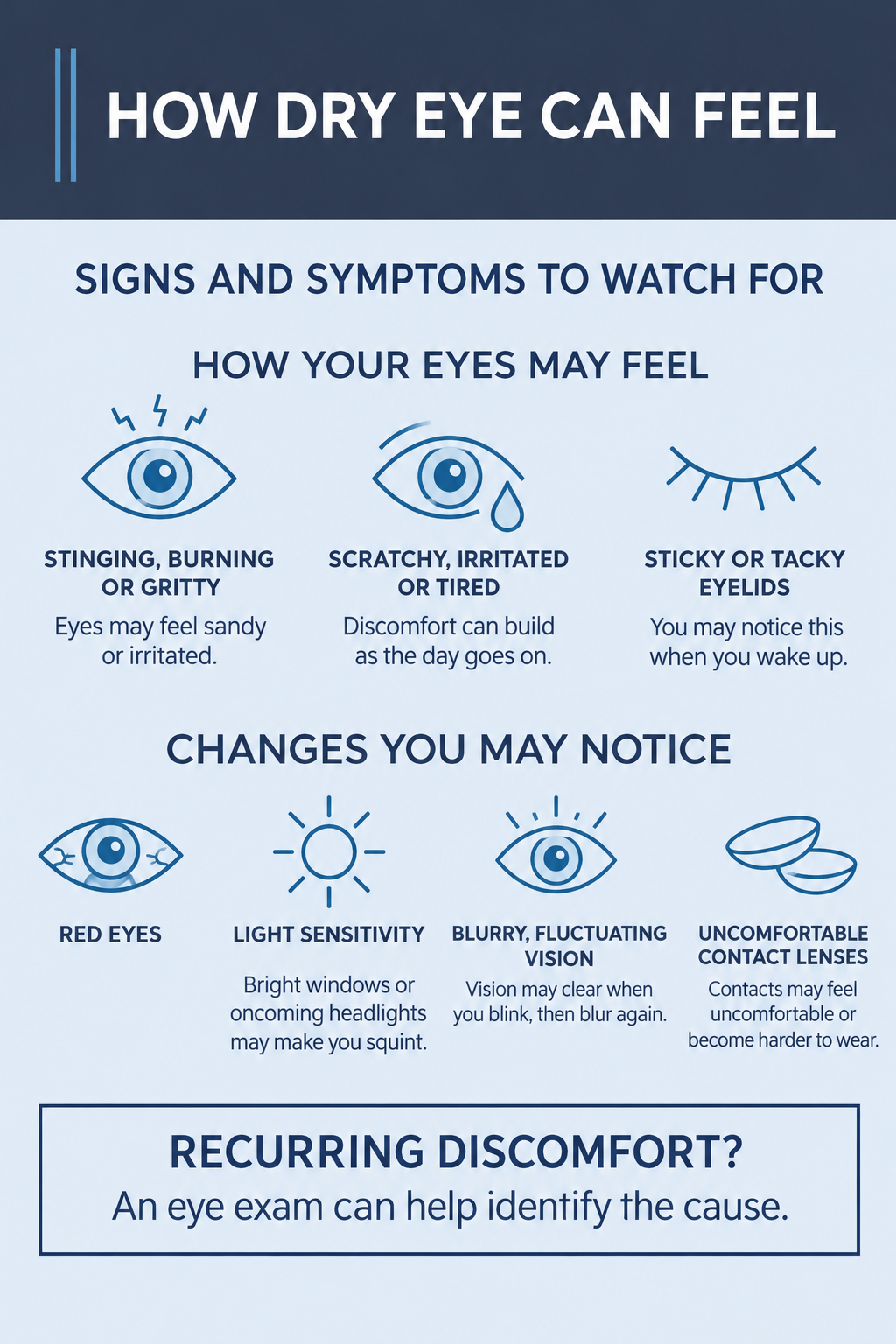
How Your Eyes May Feel
Dry eye often shows up as a feeling before you notice any visible change. You might notice these sensations:
- Your eyes sting, burn, or feel gritty and sandy.
- Your eyes feel scratchy, irritated, or tired as the day goes on.
- Your eyelids feel sticky or tacky when you wake up.
Changes You May Notice
Other signs are easier to see or affect how clearly you see. Watch for these changes:
- Your eyes look red.
- Bright windows or oncoming headlights make you squint.
- Your vision blurs, clears when you blink, and then blurs again.
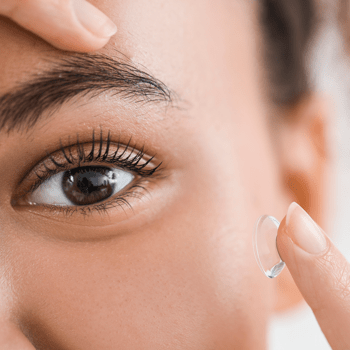
- Your contact lenses feel uncomfortable or hard to wear.
Why Dry Eye Can Feel Watery
Watery eyes might seem like the opposite of dry eye. However, dry eye can feel like something’s stuck in your eyes, so your eyes make extra tears to flush it out. These extra tears are often lower quality.
As a result, your eyes can still feel dry even with tears running down your cheeks.
What Contributes to Dry Eye?
Health and Lifestyle Factors
Your body and daily habits can play a part. Age and hormone changes, like menopause or pregnancy, can affect your tears. Conditions like rosacea, diabetes, thyroid disease, and arthritis are also linked to dry eye.
Smoking, a diet low in omega-3s, and low vitamin D can add to the picture too.
Medications and Eye Drops
Some everyday medications, including antihistamines, antidepressants, and birth control pills, can leave your eyes feeling drier. Preservatives in eye drops used over long periods can also play a role.
Eyelid concerns like blepharitis or blocked oil glands are another common factor.
Screens, Contacts, and Your Surroundings
When you stare at a screen, you tend to blink less often, and many of those blinks are only partial. Contact lenses can also disrupt your tear film.
Your environment matters too. Dry, windy, or smoky air can leave your eyes feeling parched, and as the furnace kicks on this November, winter indoor heat can add to the dryness.

Daily Habits to Help Your Dry Eye
Eye Drops and Redness
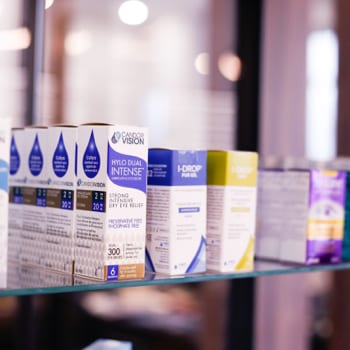
Artificial tears can help with mild, occasional symptoms. Skip “get the red out” drops, since they can lead to rebound redness. When your eyes feel irritated, rest your hands in your lap instead of rubbing.
Simple Changes at Home
A few small changes can make your days more comfortable. Try these ideas:
- Use a warm compress or heated eye mask to help with blocked oil glands.
- Run a humidifier and turn home and car air vents away from your face.
- Add omega-3-friendly foods like fish, walnuts, and flaxseed, or discuss with your optometrist recommended omega-3 supplements for dry eyes.
How a Vaughan Optometrist Can Help with Dry Eye
What to Expect at Your Dry Eye Exam
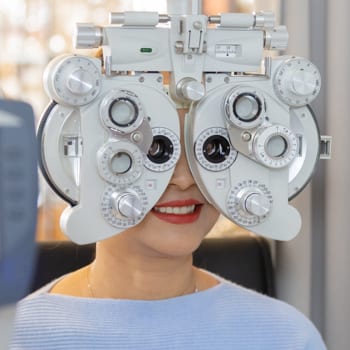
Your visit starts with a conversation. The optometrist can ask when and where your symptoms happen and review your overall health and medications.
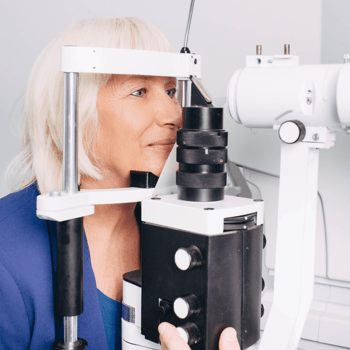
Next comes a close look at your lids, lashes, oil glands, and the surface of your eyes.
Treatment Options for Dry Eye
Your plan depends on what the exam shows. Options can include:
- Management: OTC and/or prescription drops can help calm inflammation on the surface of your eyes. Ask your optometrist for specific recommendations rather than reaching for whatever is available, as OTC products can be overwhelming.
- Management: Punctal plugs can help keep tears on your eyes.
- Treatment: Intense Pulse Light (IPL) Therapy, Radiofrequency (RF), and lid massage can help with severe dry eye.
How Long Does Dry Eye Take to Improve?
Dry eye builds over time, so relief takes time too. Following your treatment plan and sticking with your new habits can bring gradual improvement.
If your symptoms persist or worsen, let the team know so they can adjust your plan.
Book Your Appointment
Gritty mornings and stinging afternoons can feel easier to manage with the right support. Book an appointment with a Vaughan optometrist at Foresee Eyecare, and our team can help you find a dry eye plan that fits your eyes and your life.